

Setting a table properly means finding the right balance between comfort, clarity and aesthetics. A successful table should not only look attractive: it should also allow guests to eat comfortably, serve themselves easily and enjoy the meal in a suitable atmosphere.
An everyday meal calls for a simple, practical table, while a formal dinner requires greater precision in the placement of plates, cutlery, glasses and table linen.
How do you set your table properly?
The everyday table
For an everyday meal, there is no need to multiply the elements. The aim is to create a clean table that is pleasant to use. A plate centered in front of each guest, a glass, a fork, a knife and a napkin are enough in most cases.
The basic rules to follow are simple:
• The plate is placed at the center of the setting, a few centimeters from the edge of the table;
• The fork is placed on the left of the plate;
• The knife is placed on the right, with the blade facing the plate;
• The glass is placed at the top right;
• The napkin can be placed on the left or on the plate.
For dressing the table, placemats or leaving the tabletop visible both work very well. The result should remain simple, functional and welcoming, without giving the impression of an excessive staging.

The table for a meal with close friends or family
For a family lunch, a meal with friends or an informal occasion, the table can be slightly more refined without becoming too strict. You keep the same foundations, but pay closer attention to the harmony between the tableware, napkins, glasses and decoration.
A table that is too tight or too crowded quickly loses comfort: each guest should have enough space to enjoy the meal. You should also avoid centerpieces that are too high, as they prevent guests from seeing each other and talking easily.
In this context, you can add:
• A table runner to structure the center;
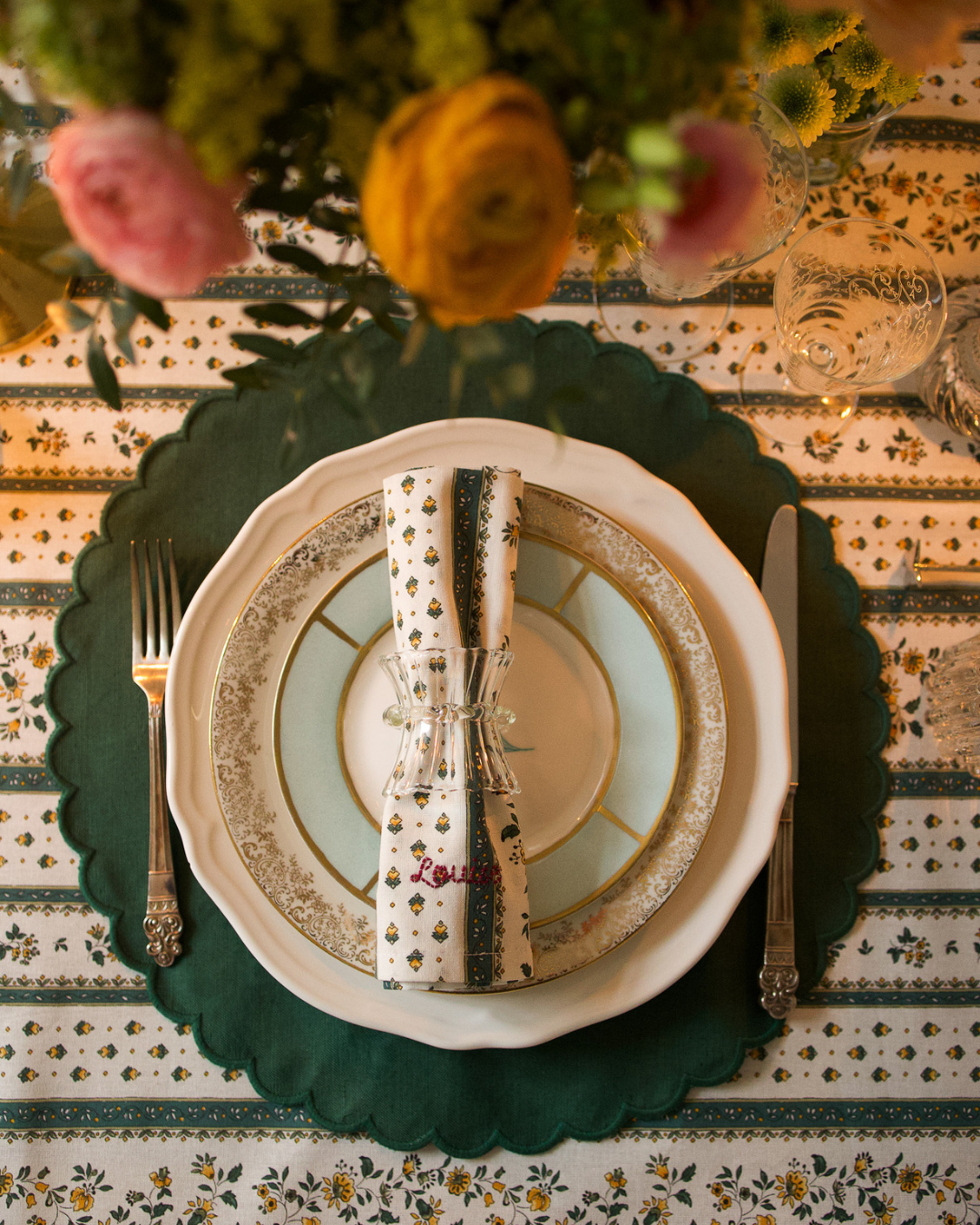
• Fabric napkins for a more polished finish;
• A small, low decoration, such as flowers, candles or seasonal elements;
• A palette of two or three colors, including the tablecloth, to keep the table harmonious.
The table should create a warm atmosphere, while remaining easy to live with.

The polished dinner table
For a more dressed-up dinner, the table setting becomes more precise. The tablecloth comes fully into play here, especially if it is made of cotton or linen. A plain base, white, ecru, beige or in a deep color, creates an elegant table without visual overload.
Cutlery is placed according to its order of use: the pieces used first are farthest from the plate, then you move inward as the meal progresses.
Dessert cutlery can be placed above the plate, but it is often more appropriate to bring it out when dessert is served.
Glasses are arranged at the top right of the plate: the water glass, generally larger, is placed first, followed by the wine glasses according to the drinks being served.
There is no need to add unnecessary glasses: an elegant table should remain clear and balanced.

The formal table, also known as French-style service
For a formal table, each detail matters more. The placement should be regular, the cutlery well aligned, the glasses ordered and the space between guests sufficient.
Ideally, each guest should have around 60 to 70 cm to sit comfortably.
A charger plate can be added to structure each place setting and give a more ceremonial feel.
If a bread plate is provided, it is placed at the top left of the main plate, above the forks. It may be accompanied by a small butter knife or spreader.
For a French-style table, the key points are:
• Plates centered in front of each guest;
• Forks on the left;
• Knives on the right, with the blade facing the plate;
• Cutlery placed in its order of use, from the outside inward;
• Glasses at the top right, often arranged diagonally (the water glass first, then the wine glasses according to the service. The champagne flute or coupe is set slightly back if one is planned.)
Even in a formal setting, you should avoid accumulation. The table setting should show care, not complicate the meal.

What mistakes should you avoid when setting a table properly?
Too much cutlery, too many glasses, decoration that is too high or too many colors can harm both comfort and elegance: you should avoid overloading your table. A successful table often relies on a few well-mastered choices.
You should also adapt the table setting to the meal being served. If no wine is planned, there is no need to set out several glasses. If dessert is served later, the cutlery can be brought out at the right time. If the meal is simple, an overly formal table can feel stiff.
The rule to remember is simple: each element should have a purpose or clearly contribute to the atmosphere. A beautiful table does not necessarily have to be spectacular. Above all, it should be consistent with the meal, comfortable for the guests and pleasant from the very first glance.
Which table linen should you choose to set your table properly?
Table linen plays an essential role, because it immediately sets the tone for the meal. It includes the tablecloth, placemats, table runner, napkins and sometimes the underlay placed beneath the tablecloth.
For a dressed-up table, the tablecloth remains the most elegant solution. It protects the table, unifies the overall setting and creates an impression of care. A drop of around 30 cm usually gives a balanced result. For a more formal reception, an underlay placed beneath the tablecloth can also improve comfort, protect the tabletop and reduce the noise of tableware.
Placemats are better suited to simple everyday meals. They structure each place setting without covering the entire table.
The table runner, for its part, dresses the center without weighing down the overall setting. It can be used alone, with placemats or on a tablecloth, depending on the level of formality desired.
Napkins should follow the same logic. Paper napkins are enough for a simple table, but fabric napkins give a much more polished finish and have the advantage of being reusable: they reduce waste while remaining elegant. They can be placed on the plate, to the left of the setting or held with a discreet napkin ring.
In need of table linens? Cajou Paris offers a variety of table linens, from tablecloths to placemats and napkins, made entirely out of certified cotton, ready to be used for casual meals and formal events alike.